
In today’s hyper-digital economy, Google reviews impact click-through rates and conversions more than ever. They shape reputations, guide trust, and influence buying decisions — even before someone visits your website.
In this blog, we’ll explore the deep impact Google Reviews have on click-through rates (CTR) and conversion performance, backed by behavior trends, trust psychology, and search engine algorithms. This article is intended for marketers, digital strategists, and company executives who want to capitalize on reputation management’s practical benefits.
What Are Google Reviews, and Why Do They Matter?
Customer reviews on a company’s Google profile are ratings and comments that are visible to the public. When someone searches for your business (or businesses like yours), these reviews appear prominently alongside key information such as location, hours, and services.
However, their worth extends well beyond appearances:
- They are indicators of trust.
- They have an impact on local search results.
- They motivate customers to take action.
Recent studies show that 93% of consumers say online reviews influence their buying decisions, and stars displayed in Google search results can increase CTR by up to 35%.
How Google Reviews Impact Click-Through Rates (CTR)
1. Greater Exposure in Search Results
Google gives preference to companies with a steady stream of good ratings. In the Local Pack results, where users are most likely to click, your company is frequently ranked higher with more stars and reviews.
Example: A restaurant with a 4.7-star rating and 800 reviews appears above competitors with fewer and lower-rated reviews, gaining more impressions and clicks.
2. Star Ratings in Rich Snippets Increase Attention
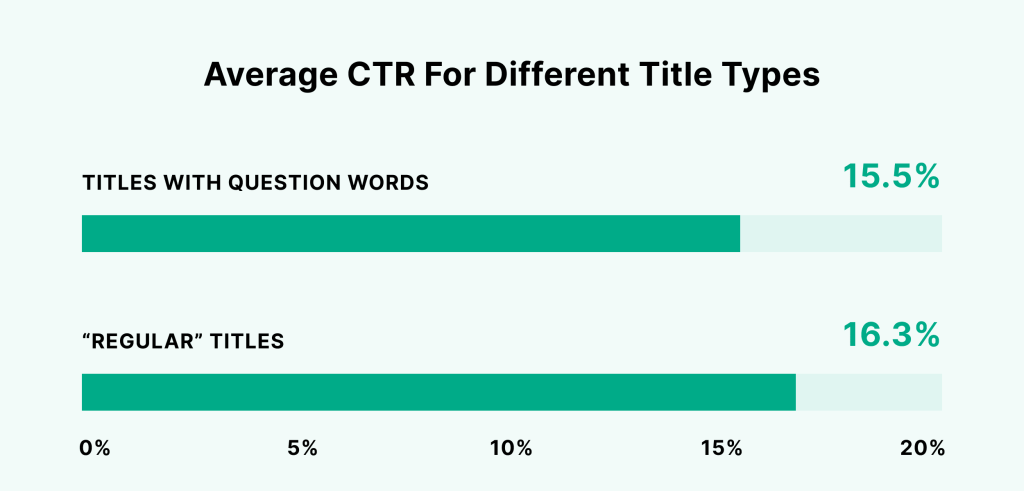
When your Google rating shows up as a “rich snippet” beneath your search result, it provides visual distinction that attracts users’ attention, particularly on mobile devices.
According to Moz’s research, star-rich results had a greater click-through rate than plain blue links. This is because of psychological validation rather than just placement.
3. Initial Thoughts Start by looking at the SERPs.
Users frequently base their snap decisions on what they can see in search results. A 4.8-star rating accompanied by actual customer reviews can change a prospect’s perspective from one of “Should I click?” to one of “I must explore this.”
Even before your website loads, your reputation is already shaping user expectations.
The Role of Google Reviews in Conversion Rate Optimization
1. Confidence-Building Social Proof
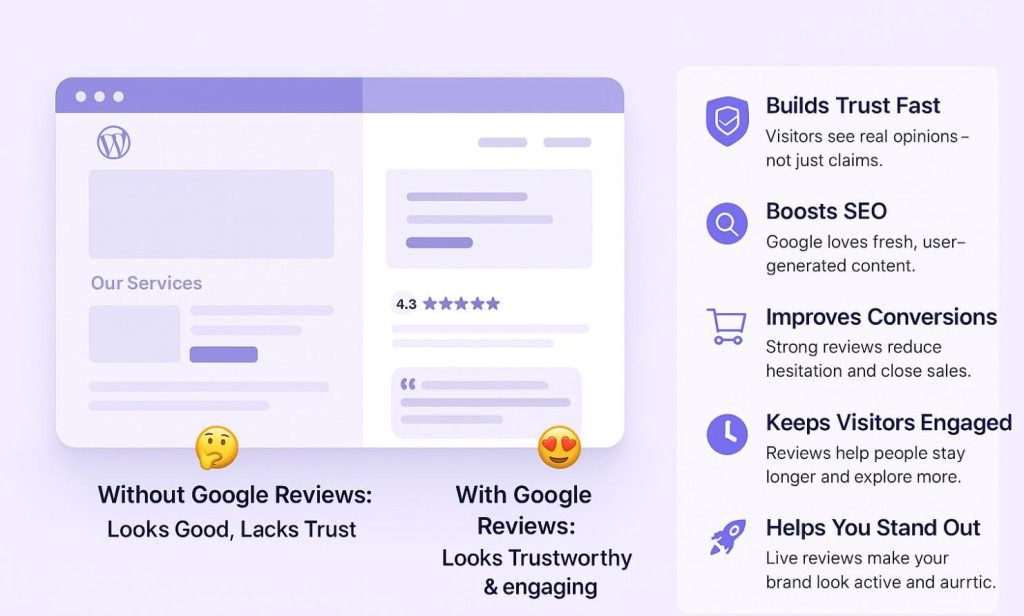
Users’ decisions are strengthened when they visit your website and read continuous positive reviews on Google. Good evaluations serve as peer validation, dispelling skepticism and boosting inclination to buy, register, or ask questions.
A Harvard Business Review study discovered that a one-star improvement in a rating system similar to Yelp can result in a 5–9% rise in revenue.
2. Impacts Intentional Decision-Making
Users that are at the bottom of the marketing funnel and are prepared to make a choice frequently seek out one final guarantee. That reassurance is provided by Google Reviews. Conversion is influenced by the positive experiences of others.
3. Bad reviews can also be helpful (if they are handled professionally).
It may surprise you to learn that a few well-received unfavorable evaluations can boost trust even more than flawless ratings. Why?
- They exhibit genuineness.
- They offer well-rounded perspectives.
- They present an opportunity to demonstrate superior customer service.
Key Business Benefits: How Google Reviews Drive Conversions and Clicks
Enhances Local SEO
Google takes into account the number, regularity, and caliber of your reviews when calculating your local rankings. Your company has a competitive advantage in map results and location-based queries if it has a favorable review profile.
Enhances Brand Recognition
A brand identity of excellence is developed by consistent five-star evaluations, particularly when clients emphasize qualities like professionalism, timeliness, or problem-solving.
Word-of-mouth and social sharing are influenced.
People are more inclined to recommend your company in forums, on social media, and in referrals when they write a positive review. Google reviews frequently serve as a launchpad for additional activism.
Decreases the Bounce Rate
Users who come from a strong review-based referral are more likely to stay longer on your website because their pre-visit expectations have already been positively shaped.
Ways to Promote More Google Reviews
While this blog focuses on impact, no strategy is complete without action. Here’s how to get more reviews in an ethical and efficient manner:
- When is the best moment to ask? (post-service or after purchase).
- Using direct links will streamline the evaluation process.
- Teach your employees to bring it up on their own.
- Answer all reviews, positive or negative, in a professional manner.
- Never offer rewards or incentives, as that violates Google’s policies.
Final Thoughts: Reputation = Conversion Power
In conclusion, it’s clear that Google reviews impact click-through rates and conversions significantly. From search engine exposure to customer trust, reviews are not just social proof — they’re conversion drivers.
Investing in reputation management today is an investment in tomorrow’s leads, traffic, and revenue.