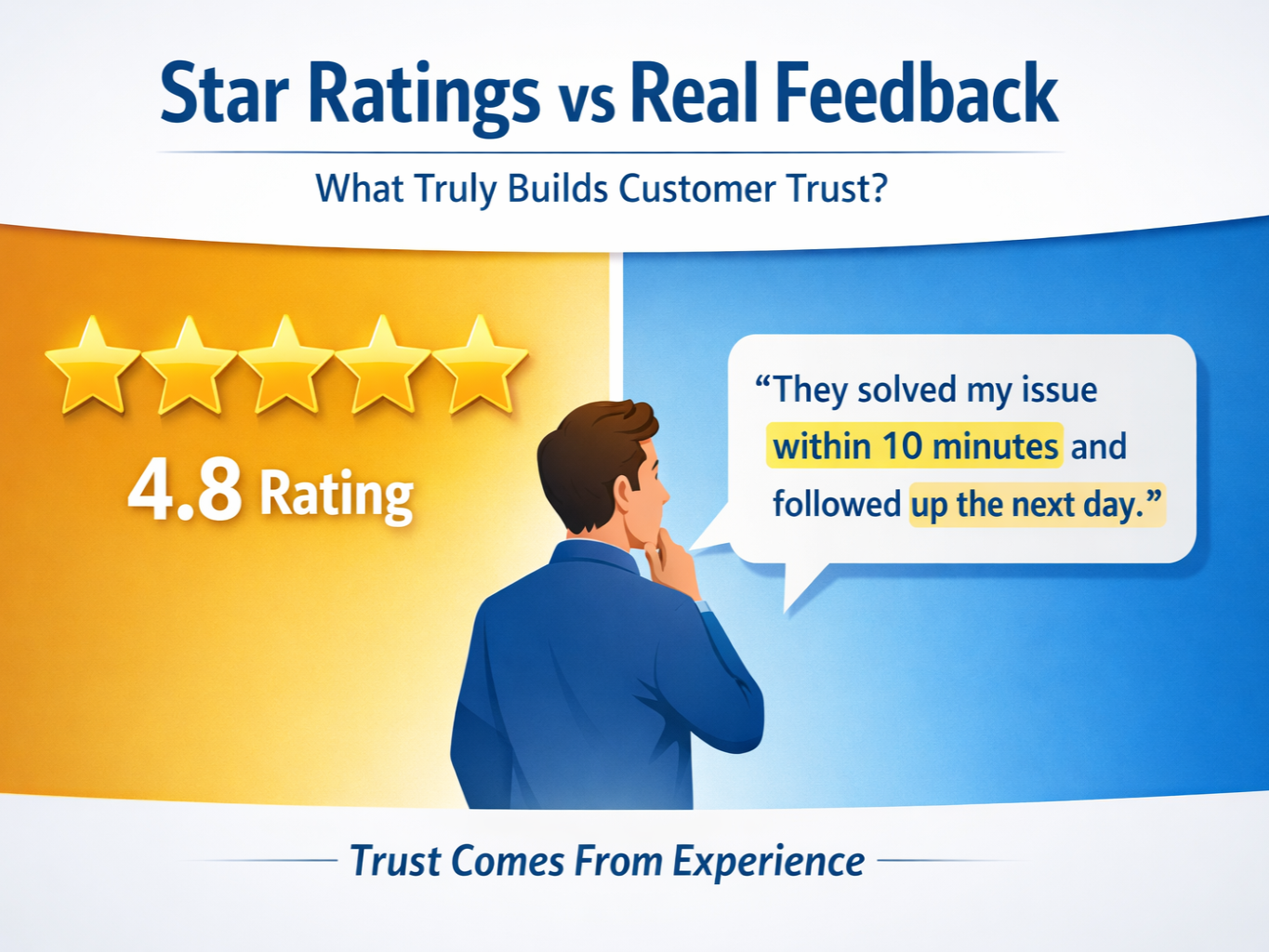
⭐ Star Ratings vs Real Feedback: What Wins?
When it comes to star ratings vs real feedback, most businesses focus only on the number of stars they receive. However, customers do not rely on stars alone. In fact, star ratings vs real feedback is now one of the biggest factors influencing buying decisions and Google rankings. While star ratings create first impressions, real feedback builds lasting trust. Therefore, understanding the difference between star ratings vs real feedback is essential for long-term business growth.
This article explains the real difference between quantitative reviews (stars) and qualitative reviews (feedback) — and why Google increasingly prefers meaningful content.
🔎 Understanding Star Ratings
Star ratings are numerical representations of customer satisfaction. Usually shown on a 1-5 scale, they help users make quick decisions.
⭐ Why Star Ratings Became Popular
👉 People prefer quick judgments
👉 Platforms need simple ranking signals
👉 Algorithms require measurable metrics
Because of this, platforms like Google Maps, Amazon, and App Stores prioritize ratings in search results.
For example, Google local ranking heavily considers rating averages. Businesses with higher ratings often appear more credible at first glance.
However, numbers lack context.
A 5-star rating may mean:
- Excellent service
- Or simply fast delivery
- Or even a fake review
Meanwhile, a 3-star rating may actually contain extremely helpful feedback.
So, although ratings are important, they are incomplete.
🧠 Understanding Real Feedback
Real feedback refers to written experiences shared by customers. These reviews explain why a rating was given.
Instead of numbers, they provide meaning.
📝 What Real Feedback Reveals
👉 Customer expectations
👉 Service problems
👉 Emotional reactions
👉 Product improvement ideas
👉 Trust signals for new buyers
Google’s Helpful Content Update strongly emphasizes experience-based content, which makes textual reviews increasingly powerful for ranking and credibility.
This is also why modern review management platforms such as
🔗 https://brand.bountify.app
focus on feedback quality instead of only rating quantity.
Because ultimately, businesses don’t grow from stars — they grow from understanding.
⚖️ Star Ratings vs Real Feedback — The Core Differences
| Factor | Star Ratings | Real Feedback |
|---|---|---|
| Speed | Fast decision | Slow but accurate |
| Information | Minimal | Detailed |
| Trust | Surface level | Deep trust |
| SEO Value | Limited | High |
| Improvement Insights | None | Strong |
| Manipulation Risk | High | Low |
Therefore, ratings help customers choose quickly, but feedback helps them choose correctly.
📊 How Customers Actually Decide
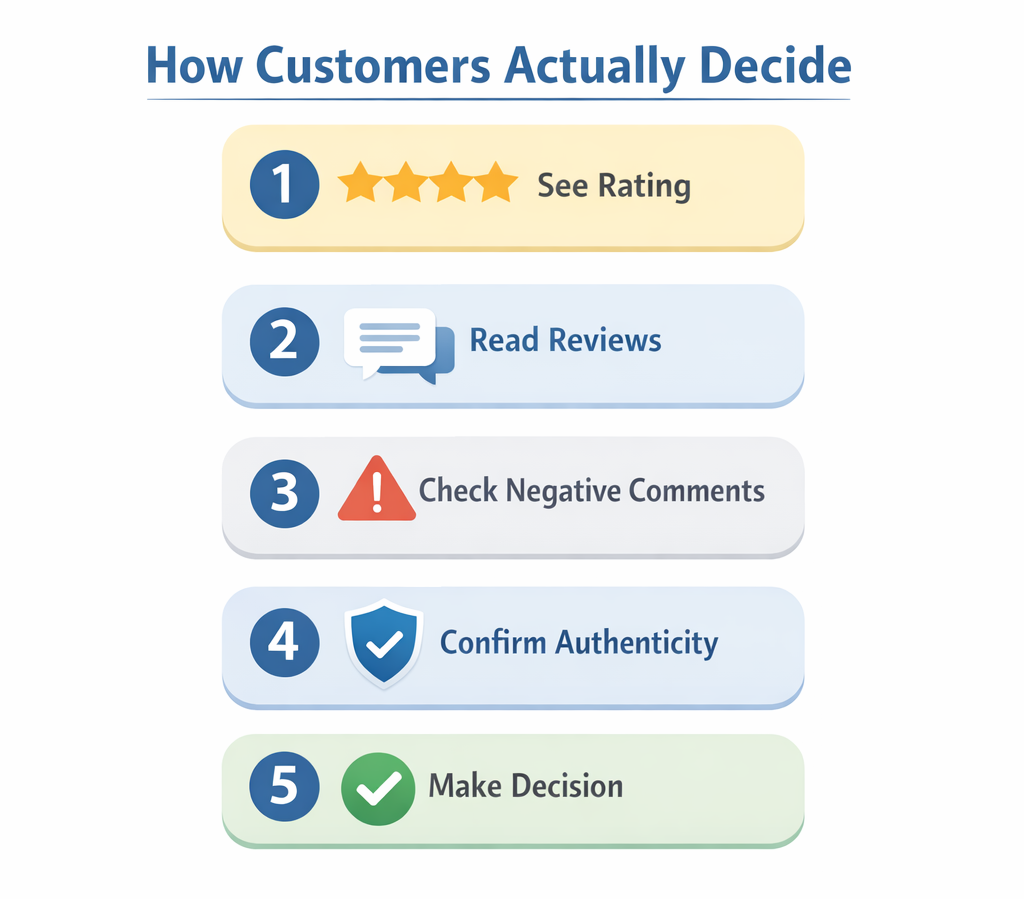
Research shows that users follow a predictable pattern:
- Notice the rating
- Open reviews
- Read negative comments first
- Confirm authenticity
- Make decision
This means stars attract attention — but feedback closes the deal.
So, the winner in conversion power is clearly real feedback.
The Problem With Star Ratings Alone
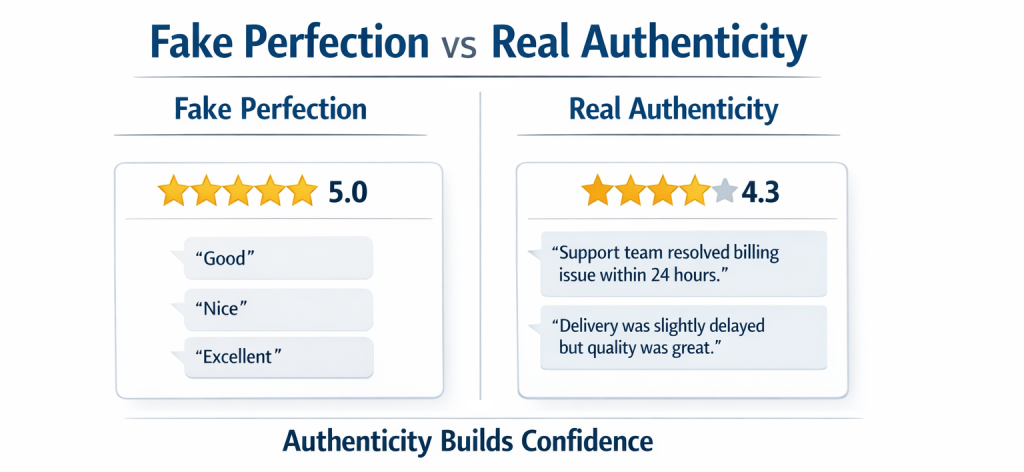
Many businesses chase a perfect 5.0 rating. Surprisingly, that can reduce trust.
Why?
Because customers suspect manipulation.
🚨 Red Flags Customers Notice
👉 All reviews look similar
👉 Only positive comments exist
👉 No criticism appears
👉 Sudden rating spikes
In contrast, mixed feedback increases authenticity.
A 4.3 rating with honest reviews often converts better than a perfect 5.0 rating.
Google also detects unnatural patterns. Therefore, over-optimizing ratings can harm rankings instead of helping.
🧩 Why Real Feedback Helps SEO
Search engines no longer rank only websites. They rank experience signals.
Reviews now act as user-generated content — a major SEO factor.
📈 Benefits of Detailed Feedback
👉 Adds keyword diversity
👉 Improves local ranking relevance
👉 Builds E-E-A-T (Experience, Expertise, Authority, Trust)
👉 Increases dwell time
👉 Enhances credibility
For example, if customers repeatedly mention
“fast delivery”, “good support”, or “easy setup”,
Google associates your brand with those search terms.
Therefore, feedback becomes an organic SEO asset.
🏆 The Psychology Behind Trust
Humans trust stories more than numbers.
Numbers appeal to logic
Stories appeal to emotion
And buying decisions are emotional first, logical later.
🧠 What Buyers Think
- ⭐⭐⭐⭐⭐ → Looks good
- “They solved my issue in 10 minutes” → Feels reliable
Hence, real feedback builds confidence.
📉 When Ratings Mislead Customers
Imagine a hotel with a 4.8 rating but recent negative reviews about cleanliness.
A user reading feedback will avoid it despite the rating.
Therefore:
Recent feedback > Overall rating
Google also prioritizes recent activity in local rankings.
💼 Business Perspective: What Should You Track?
Instead of chasing rating numbers, track:
📊 Meaningful Review Metrics
👉 Sentiment trend
👉 Complaint frequency
👉 Response speed
👉 Topic repetition
👉 Resolution satisfaction
Platforms like
🔗 https://brand.bountify.app/blog
help businesses analyze patterns rather than averages.
Because growth comes from patterns, not scores.
🧪 Case Example
Business A
Rating: 4.9
Reviews: “Nice”, “Good”, “Great”
Business B
Rating: 4.3
Reviews: Detailed service stories, staff names, problem resolutions
Result:
Business B converts more customers.
Why? Authenticity.
🔄 The Hybrid Strategy (Best Approach)
The goal is not choosing ratings or feedback.
The goal is combining them.
🏅 Ideal Review Profile
👉 4.2 – 4.7 rating range
👉 Mixed but positive sentiment
👉 Detailed experiences
👉 Active responses
This profile appears trustworthy to both Google and humans.
💬 Importance of Responding to Reviews
Responding transforms feedback into marketing.
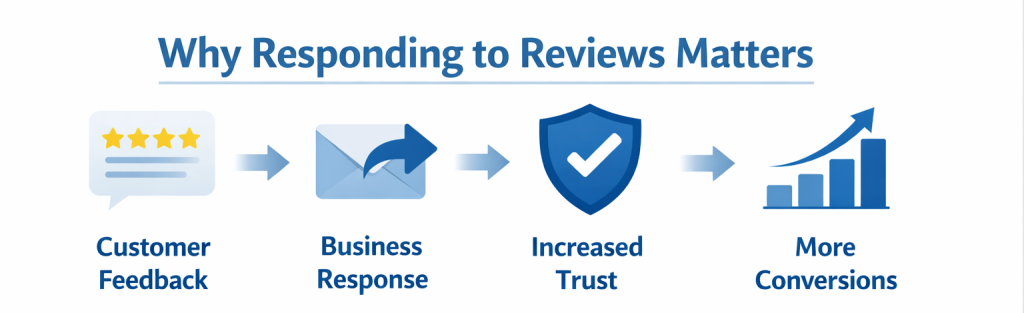
Benefits
👉 Shows accountability
👉 Improves ranking signals
👉 Encourages new reviews
👉 Reduces negative impact
Even negative reviews can increase trust if handled well.
🧭 Google’s Future Direction
Google is moving toward experience-based ranking signals.
This includes:
- Review content relevance
- User interaction
- Engagement signals
Therefore, real feedback will become stronger than ratings over time.
🏁 Final Verdict: What Wins?
Star ratings win attention.
Real feedback wins trust.
And trust wins customers.
So, the real winner is feedback-driven reputation supported by healthy ratings.